

Movement & Recovery
Movement and recovery habits for daily pressure
When stress is mostly mental, the body is still involved. A walk, a training session, or a hard ride changes your thinking in a way that sitting and reasoning rarely does.
Recovering well enough that the movement keeps helping
Most men stop the routine at the training itself. The part that decides whether next week feels lighter is what happens after: sleep, food, an easy walk, and a little time away from screens. This page walks through each lever, in the order it usually pays off, and shows how to fit them to a real working week in Jakarta.
The least glamorous option
Why walking works better than you expect
Ten to twenty minutes at lunch will do more for an irritating afternoon than any amount of willpower.
It changes the room you are in
Walking gets you out of the same four walls, off the same chair, and away from the screen that is feeding the irritation. The change of environment does most of the work before you have decided anything about your mood.
It changes your posture
Standing up straight and moving forward shifts the tension out of your neck and shoulders. It is a small thing that you notice only when you sit back down and the knot has loosened.
It gives your attention a small job
Traffic, curbs, a warm stretch of pavement, the direction you chose. That is enough to occupy the part of your head that would otherwise keep replaying the meeting.
It has no entry requirements
You do not need a destination or a pace target. Leave the building, walk in any direction, come back. If that sounds too simple to count, it is exactly why it survives a bad week.
The walk is the habit you can still do on the day the plan fell apart. Nothing to change into, no gym to reach through Jakarta traffic, no session to complete. That low cost is the point: it stays available on the days you have the least patience for anything more ambitious.
Keep the sessions you already have
Training when your head is loud
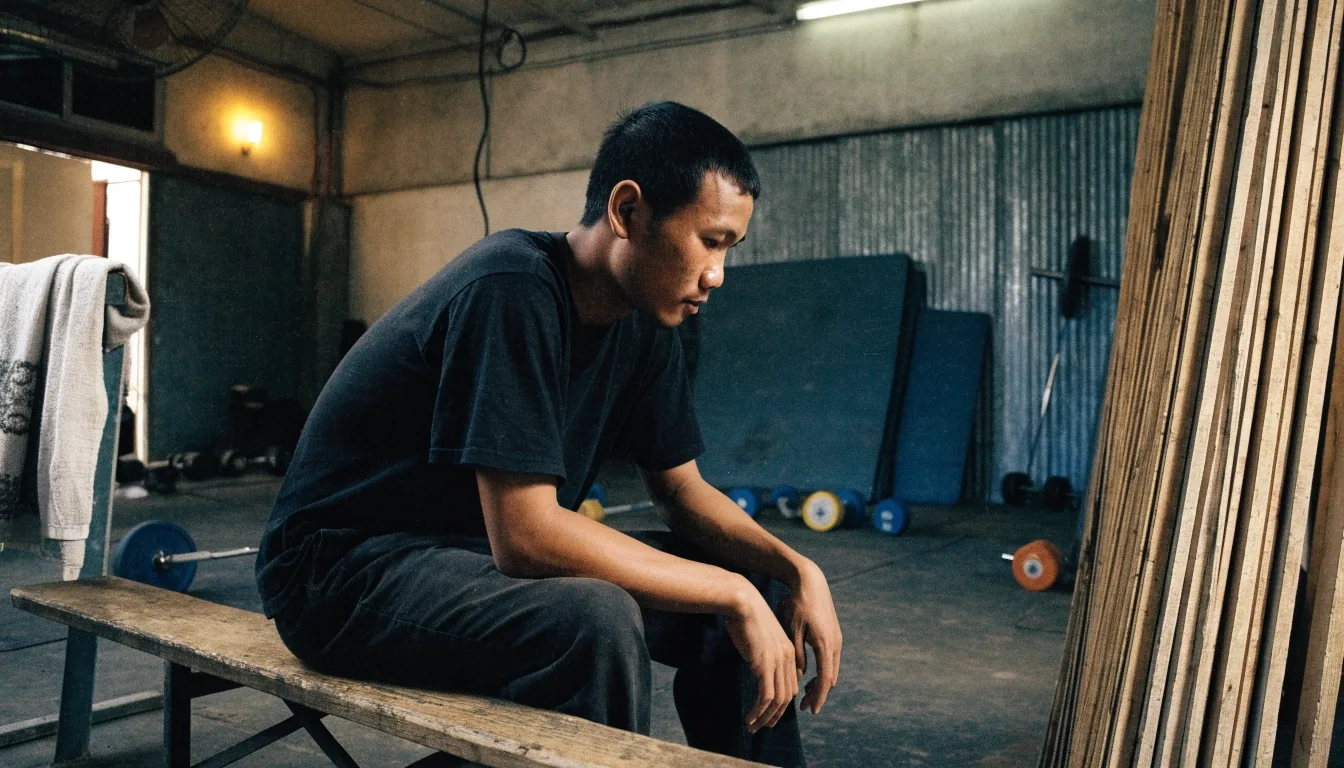
If you already train, keep training. A hard session is a legitimate way to burn off frustration, and many men find it easier than sitting still with the feeling. The condition is simple: don't let a bad day turn into a punishing session that leaves you wrecked for two days after.
Moderate and regular
Two or three steady sessions across the week do more for pressure than one blowout. The steady version leaves you able to work, sleep and be decent company the next morning.
A little visibility helps
If you use Strava or a similar activity app, the social side earns its place here. Being visible to a few friends is often what actually makes an easy day happen instead of a skipped one.
Read the session as data about your week, not as a verdict on your character. A sluggish lift after three short nights is information you can act on at bedtime, not a reason to add another set.
Recovery is not the same as rest
Recovery means the things that let your body absorb the training and the day. It is a short list, and most men already know it. The gap is usually in the order and in how honestly you are tracking it.
Read the sleep and evening guide-
1
Sleep first
Nothing else on this list compensates for a short night. If you only fix one thing this month, fix the window you go to bed in, and hold it on weeknights even when the day ran long.
-
2
Food on a predictable rhythm
Regular meals matter more than the perfect plate. Skipping lunch and then eating late is one of the commonest ways a good training week turns sour by Wednesday.
-
3
Easy movement, not more load
A short walk, stretching, or an easy swim. Enough to keep the rhythm going without asking your body for another hard effort.
-
4
Time away from screens
The last hour before bed is the one that decides how the next morning feels. If work messages live on the same device, put the device in a different room for that hour.
What is missing for many men is not knowledge but a way to see whether recovery is actually happening. That is the one question a tracking tool can answer better than a feeling can. Readiness-style views built on strain and sleep data are useful if you are already data-driven. They are optional otherwise, and skipping them is a legitimate choice.

Sleep discipline as a performance habit
Treat your bedtime as part of training. A consistent window on weeknights makes the whole week easier, including the parts that have nothing to do with exercise. The same 30 to 45 minutes, moved earlier and held steady, does more than any amount of catching up at the weekend.
If you track sleep, look for patterns across a week rather than judging individual nights. One bad night is noise. Four bad nights in a row is a signal to change something — usually the evening, not the morning.
A fixed wake time
Anchoring the morning makes the evening take care of itself. Pick the hour you can hold on weekdays before work and let bedtime follow from it.
A wind-down that starts before bed
The last hour is for lowering the pace, not finishing the day. A shower, a short stretch, something to read that is not a screen.
Weeknight rules, weekend slack
Hold the window Monday to Friday and ease off at the weekend. Strictness every night is the version that collapses in the third week.
Weekly, not nightly
Read the pattern, not the single night. A rough Wednesday inside a solid week tells you nothing worth changing.
Movement on the days you don't train
Rest days still need movement, and the amount is smaller than most men expect. A short walk, twenty minutes of stretching, or an easy swim keeps the rhythm intact and helps you sleep. The point on those days is not fitness. It is continuity.
Men who stop moving entirely on rest days often find Monday training harder than it should be, both physically and mentally. Two days fully still and the first session back feels like starting over, which is exactly the feeling that makes the whole plan feel too heavy to resume.
Think of it as keeping the lane open rather than adding a workout. Ten quiet minutes is enough to make the next real session feel normal again.

A plan that survives a Jakarta week
Be honest about your available slots. Three mornings before work, or two evenings, or lunchtimes on office days. Pick what is real and build around that instead of the week you wish you had.
Matching the habit to your week
A plan that assumes five free evenings a week will collapse in Jakarta traffic. A plan that assumes two lunch walks will usually survive. Build the small version first, then add a session only where the week has genuinely held up twice in a row.
See the daily routine structureThe two-lunch-walk week
Two 15-minute walks on office days, one evening session if the week allows. This is the version that holds for a man with a full calendar and unpredictable traffic.
The three-morning week
Three sessions before work, Monday, Wednesday, Saturday, plus walking on the days between. Choose this only if you already wake early without a fight.
The short-night week
When sleep has been poor, drop to easy movement and hold bedtime instead of adding training. This is the week to protect recovery, not push through it.
The travel week
Airport days, hotel rooms, no gym nearby. A walking loop around the block, stretching in the room, and an honest bedtime are enough to keep the thread unbroken.

Start with the one habit this week can hold
Pick a single lever — a lunch walk, a fixed bedtime, or one steady session — and run it for two weeks before adding anything else. If you already use a tracker and want to see how the options compare, the comparison page sets them side by side.
Questions men ask before they start
Three answers that come up most often when men first try to use movement and recovery as a lever on a busy week.
What kind of exercise works best when stress is mostly mental?
Walking and moderate training, done regularly. Intensity is not the deciding factor; consistency is. A short walk that actually happens beats an ambitious session that does not.
Do I need a wearable to track recovery?
No. A consistent bedtime and honest notes about how you feel cover most of it. A wearable helps if you like data and will actually read the weekly picture rather than the nightly number.
How much movement per week is enough to help?
Two or three sessions plus daily walking is a realistic target for most working men. Build toward that from wherever you are now, and hold the bedtime steady while you do.
Where to go next on CalmMen
Movement is one lever. These pages cover the ones that sit beside it, and the standalone tools worth comparing if you like to see the numbers.
Everyday Routines
How to shape a working day around a few habits that survive a full calendar and an unpredictable commute.
Stress Triggers at Work
The recurring moments that raise the pressure, and what a practical response looks like on an ordinary Tuesday.
Breathing & Quiet Practice
Short, repeatable ways to settle the body between meetings, including a wind-down that pairs with a fixed bedtime.
Tools & Apps Compared
A side-by-side look at tracking and habit apps, what each one is actually good for, and when a notebook is enough.